- Student voice
- Overview
- Research
- Publications
- News
- Job opportunity
The Nobel Prize in Physiology or Medicine 2023
Prize motivation: “for their discoveries concerning nucleoside base modifications that enabled the development of effective mRNA vaccines against COVID-19”
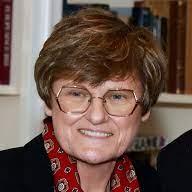
Dr. Katalin Karikó's research has been pivotal in advancing the field of mRNA (messenger RNA) technology, particularly in its application for therapeutic purposes. Her work spans decades and focuses on understanding RNA-mediated mechanisms and harnessing them for medical breakthroughs. One of her major contributions lies in exploring how to mitigate the immune response triggered by synthetic RNA molecules, a critical hurdle for their therapeutic use.
Together with her colleague Drew Weissman, Dr. Karikó discovered that modifying nucleosides within RNA molecules can effectively suppress their immunogenicity. This breakthrough has vastly expanded the potential of mRNA as a tool for treating various diseases. It laid the groundwork for the development of mRNA-based vaccines, including the highly successful BioNTech/Pfizer and Moderna vaccines against COVID-19. These vaccines have demonstrated unprecedented efficacy and have been instrumental in combating the global pandemic.
Dr. Karikó's pioneering research has not only revolutionized vaccine development but also holds promise for a wide range of therapeutic applications. Her work continues to explore new avenues for mRNA therapy, aiming to harness its potential in treating diseases beyond infectious diseases, such as cancer and genetic disorders.
Recognized with prestigious awards like the Breakthrough Prize in Life Sciences, the Princess of Asturias Award, and the Vilcek Prize for Excellence in Biotechnology, Dr. Karikó's contributions underscore her profound impact on biomedical science. She remains a leading figure in the field, dedicated to translating scientific discoveries into tangible benefits for patients worldwide.

Reference:
MLA style: Katalin Karikó – Facts – 2023. NobelPrize.org. Nobel Prize Outreach AB 2024. Tue. 9 Jul 2024. <https://www.nobelprize.org/prizes/medicine/2023/kariko/facts/>
Dr. Katalin Karikó has dedicated decades to RNA-mediated research, aiming to advance in vitro-transcribed mRNA for protein therapy. Her work delves into RNA-mediated immune activation and, alongside Drew Weissman of Penn Medicine, she co-discovered that nucleoside modifications can suppress RNA's immunogenicity. This breakthrough significantly broadened the therapeutic potential of mRNA, paving the way for the development of the highly effective BioNTech/Pfizer and Moderna COVID-19 vaccines, and offering promise for treating numerous other diseases. Recently, Dr. Karikó was honored with prestigious accolades including the Breakthrough Prize in Life Sciences, the Princess of Asturias Award, and the Vilcek Prize for Excellence in Biotechnology. She remains actively involved in exploring novel therapeutic applications of mRNA therapy.
Krienke, C, Kolb, L, Diken, E, Streuber, M, Kirchhoff, S, Bukur, T, Akilli-Öztürk, Ö, Kranz, LM, Berger, H, Petschenka, J, Diken, M, Kreiter, S, Yogev, N, Waisman, A, Karikó, K, Türeci, Ö, and Sahin, U : A noninflammatory mRNA vaccine for treatment of experimental autoimmune encephalomyelitis. Science 371(6525): 145-153, Jan 2021.
Hotz, C, Wagenaar, TR, Gieseke, F, Bangari, DS, Callahan, M, Cao, H, Diekmann, J, Diken, M, Grunwitz, C, Hebert, A, Hsu, K, Bernardo, M, Karikó, K, Kreiter, S, Kuhn, AN, Levit, M, Malkova, N, Masciari, S, Pollard, J, Qu, H, Ryan, S, Selmi, A, Schlereth, J, Singh, K, Sun, F, Tillmann, B, Tolstykh, T, Weber, W, Wicke, L, Witzel, S, Yu, Q, Zhang, YA, Zheng, G, Lager, J, Nabel, GJ, Sahin, U, and Wiederschain, D: Local delivery of mRNA-encoding cytokines promotes antitumor immunity and tumor eradication across multiple preclinical tumor models. Science Translational Medicine 13(610): eabc7804, Sep 2021 Notes: [Epub Ahead of Print]
Sahin, U, Muik, A, Derhovanessian, E, Vogler, I, Kranz, LM, Vormehr, M, Baum, A, Pascal, K, Quandt, J, Maurus, D, Brachtendorf, S, Lorks, V, Sikorski, J, Hilker, R, Becker, D, Eller, AK, Grutzner, J, Boesler, C, Rosenbaum, C, Kuhnle, MC, Luxemburger, U, Kemmer-Bruck, A, Langer, D, Bexon, M, Bolte, S, Karikó, K, Palanche, T, Fischer, B, Schultz, A, Shi, PY, Fontes-Garfias, C, Perez, JL, Swanson, KA, Loschko, J, Scully, IL, Cutler, M, Kalina, W, Kyratsous, CA, Cooper, D, Dormitzer, PR, Jansen, KU, and Tureci, O.: COVID-19 vaccine BNT162b1 elicits human antibody and TH1 T cell responses. Nature 586(7830): 594-599, Oct 2020.
Karikó, K., Muramatsu, H., Welsh, FA., Ludwig, J., Kato, H., Akira, S., Weissman, D.: Incorporation of pseudouridine into mRNA yields superior nonimmunogenic vector with increased translational capacity and biological stability. Molecular Therapy 16: 1833-1840, 2008.
Karikó K, Buckstein M, Ni H, Weissman D.: Suppression of RNA recognition by Toll-like receptors: the impact of nucleoside modification and the evolutionary origin of RNA. Immunity 23(2): 165-75, 2005.